Pages

Tuesday, May 7, 2013

Israeli planes bomb Damascus, Syria without reprisals


 As Israel has bombed two sites within Damascus, Syria (article here) I am surprised that Iran and Syria haven't responded with violence, leading me to the conclusion that Israel seems:

1. to be able to attack with impunity any country near them
2. to potentially be trying to draw Iran or Syria into a larger war so that they can bring American support
3. to isolate Gaza further from Hezbollah support in Syria and Lebanon

As the civil war in Syria has been raging for over a year now, the Israeli line that they are protecting themselves through preemptive attack rings hollow since not once has the instability within Syrian borders spilled over into Israel despite Israeli control of the Syrian Golan Heights.

Elsewhere, the "Arab Spring" seems to have stalled and become an Arab Autumn or Fall... as one regime after another seems to falter with misguided steps.

Sunday, April 21, 2013

Lightstalkers.org "professional travelers" website

Just learned about Lightstalkers... very interesting community... I like their tagline / mission statement: "Lightstalkers is a professional and social resource for journalists, filmmakers, photographers, and professional travelers. We live and work in uncharted, unstable territory, navigating the grey areas of geography and technology. We travel in countries that are still in development or recently destroyed, using gear just barely out of R&D. Lightstalkers helps us to help each other—it's how we pool our knowledge and experience."

Tuesday, February 26, 2013

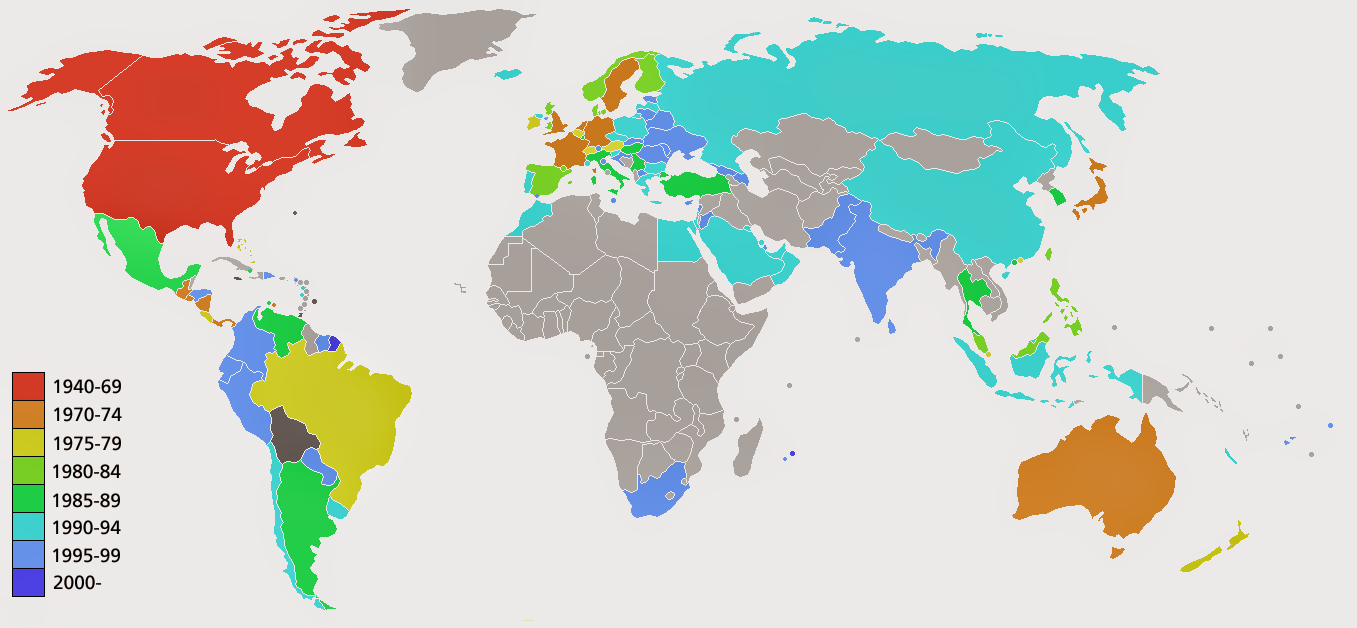
Travel Tuesdays: Where to find McDonald's and Starbucks worldwide

There are very few places worldwide that I've been where I haven't seen a McDonalds or Starbucks, or maybe it just seemed that way. Both are very popular and continuing to grow in influence worldwide even if they seem to have saturated USA markets. In China at least, McDonalds seems to be losing out to KFC (Kentucky Fried Chicken) but time will tell.

As I travel to new countries, I seek out more remote places, where such franchises are not yet as invasive (even if Pepsi and Coke have long established themselves). I've realized over the years that pretty much anywhere in the world can be reached for under $2000 in airfare (though sometimes many small flights must be assembled when more direct flights are cost prohibitive) and a lot less if stringing together distant locations via a RTW ticket. With this knowledge in mind, there is nothing stopping someone in the mainland US from visiting Hawaii every year for a week or picking a new Caribbean cruise annually.

Since most trips can be completed in total under $2000 (for shorter trips) I have long wondered why so many people I meet don't travel more. Sure, there is disparity of income worldwide and visa issues for many, but most countries in the world are small so there is plenty of opportunity for regional travel. Do you live in Kuala Lumpur? Well, great, then you can visit over a dozen countries with Air Asia and have complete trips under $1000 easily. It is all a matter of prioritization.

So why, if it is cheap and doable, don't more people travel? I think fear of the unknown is the key factor. So many people when the travel to another country seek out the food of their homeland. I've seen many Indian and Chinese tourists travel with their own food. Americans are almost notorious for seeking out McDonalds and Starbucks overseas.

Some might argue that in order to truly get off the beaten track, you must travel to locations without a McDonalds. On the map below, that would be all the grey areas, which now are mainly limited to Central Asian and African countries (with a few other examples spread around the globe).

It is probably not surprising that those grey countries also generally have little western tourism, lending value to my hypothesis that people are afraid to travel and when they do, they'll seek out familiar locations first.

It's a good thing my favorite color is grey :) as I'll have a lot of traveling there in the coming years!

Sunday, January 20, 2013

How the US military and contractors fostered prostitution in Iraq

There's an interesting article on the role of the US military occupation in fostering a class of prostitutes in Iraq. I've long been interested in the plight of trafficked women and children for sexual slavery or pressures that excert on a population to increase rates of prostitution beyond normal social mores.

While the article is a little out of date (November 2007) it does point out that military occupations almost always lead to increases in prostitution. This of course isn't unique to the US and I've read before that Nigerian and Sri Lankan UN peace keepers often perpetuate prostitution as well. Prostitution is often seen near military bases (Angeles City outside of Manila, Philippines, is a notorious example). After discussing this article with several friends, they had these good points to say:

"[The author] seems to disproportionately bash the US (which she seems to have retained as a home country), even though this is a general pattern of war since time began and not specific to American wars in the 20th century. Her next target seems to be the private contractors, who really only differ from some previous wars by their nationality (the "engineer" in Miss Saigon was a local trafficker, but she doesn't seem as bothered by that) or that they are private contractors (een though mercenaries have also been the norm in warfare for most of history). In fact the right for a government to maintain a standing army in times of peace (1994 - 2001 [in the US] for example) should be even scarier.

"The Turks occupied Iraq far, far longer than the US is likely to, and they certainly weren't any more feminist in their pimping and trafficking, but they just didn't have mobile phones and English language journalists. And the rise of Dubai with the collapse of the Soviet Union also led to a spike in trafficking from the CIS to the Gulf, which in the past year or two economics has diverted to India.

"The trick is to make women well-off and traffickers poor -- which is the same in war or peace, America or the Ottoman Empire, whether the money is private or government [in source]."

Another friend notes: "It's one thing to investigate this issue during times of war, but far more concerning when it thrives during times of peace. The prosperous and politically stable Japanese are notorious for being the single largest consumers of the sex trade in Asia - even more than the money sex tourism generates in Thailand. In a book I read (also written by a British feminist), the author documented how Asian prostitutes prefer to 'do business' with Western men who treat them well compared to Chinese and Japanese men who engage in violent sexual acts leaving some women mutilated and handicapped."

The main point is that the sex trade will never cease and there is probably nothing inherrently wrong with it so long as it belongs in the scope of "a woman's right to choose." The problem lies in coersion, abuse, and trafficking.

For those concerned about the state of Iraqi collaborators and refugees following the US withdrawal fro Iraq next year, look at this report by Human Rights Change. They note that "As the American military drawdown in Iraq continues, the issue of protecting our Iraqi allies is at a critical stage. The List Project released an advocacy paper, Tragedy on the Horizon, which examines how the American withdrawal from Iraq will impact the thousands of Iraqis" currently collaborating with the US military occupation.

Like the point on the sex trade above, the issue is not that such retalitory actions haven't occurred in the past or occur elsewhere (all countries with large civil wars have faced such actions, with Sri Lanka [against Burghers], Vietnam [against South Vietnamese and in Laos against Hmong], Iraq [both present threats and in the past Saddam targeted the Kurds], etc.). The issue is that with the burden of history and knowledge on our backs, in this modern world, can't we do better now? Probably not though since lots of foreseeable and predictable tragedies occur following wars.

Friday, November 16, 2012

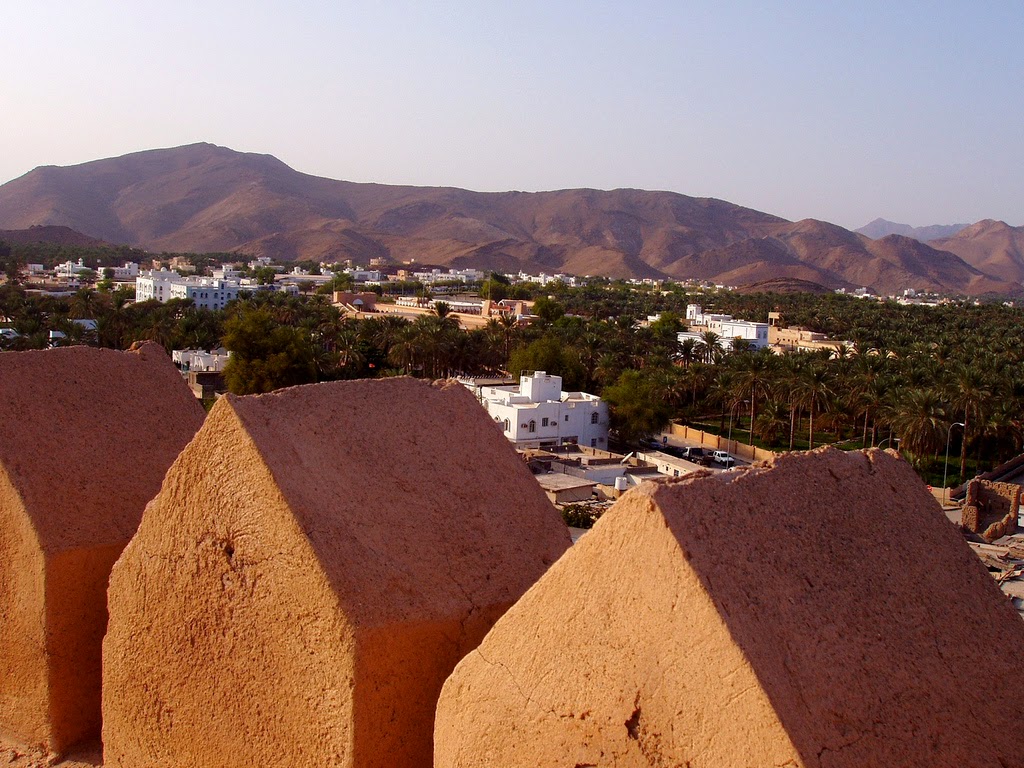
Foto Fridays: Oman (10 best pix)

Here are what I hope can be considered the 10 best pictures I took in Oman that are not repetitive and showcase what is unique about that amazing country.


As usual, this is not the kind of trip report you'd find in WikiTravel or Lonely Planet. I've linked to each of those travel reviews above.

Rather I just want to provide my perceptions of Oman.

While my travels in the Middle East are not extensive, I can safely say that Oman was my favorite country in the region to travel through. Of course, I want to travel to all Middle Eastern countries and feel that now is an amazing time in Muslim history. But back to Oman.

When I first went to Oman, there were less than 13,000 hotel beds in the entire country... though the Al-Bustan Palace hotel was the first 6-star hotel in the world (with the Burj Al-Arab having recently opened and the Palm Islands of Dubai years away from completion). Road construction, while not as rampant as in Dubai, was quite extensive... and at the time I learned the mistake of trusting printed maps, which showed future roads and not the present conditions... when trying to drive from Muscat to Sur. I didn't make it there, as the road disappeared into a rocky beach and I had but a sedan.

Oman was quite expensive to travel through at the time, and I'm sure it still is, and hotels were hard to find. However, I found a genuine-ness to the people there that I did not feel in more touristed spots like Dubai and Egypt. Hospitality still meant something to a stranger met on the street for a chance encounter.

I definitely want to get back to Oman, where I first climbed mountains with gypsum and crystals coming out of the desert. The monarch is very environmentally oriented as well and the version of Islam practiced there is unique to the region. Old spice markets abounded without the chaos and throngs of Egyptian population density. Everything seemed untouched, preserved, more sanitary, and generally development seemed to fit in with the region quite well.

I would certainly recommend Oman and long to get back there as well, perhaps this time to make it from the northern Musandam Peninsula and offshore islands in the Straits of Hormuz to the far south and cross over into Yemen... though next time I'd go with a truck!

See the full gallery on Flickr